Home Solar EV Charging Setup: How Many Solar Panels Do You Really Need for Daily Driving?
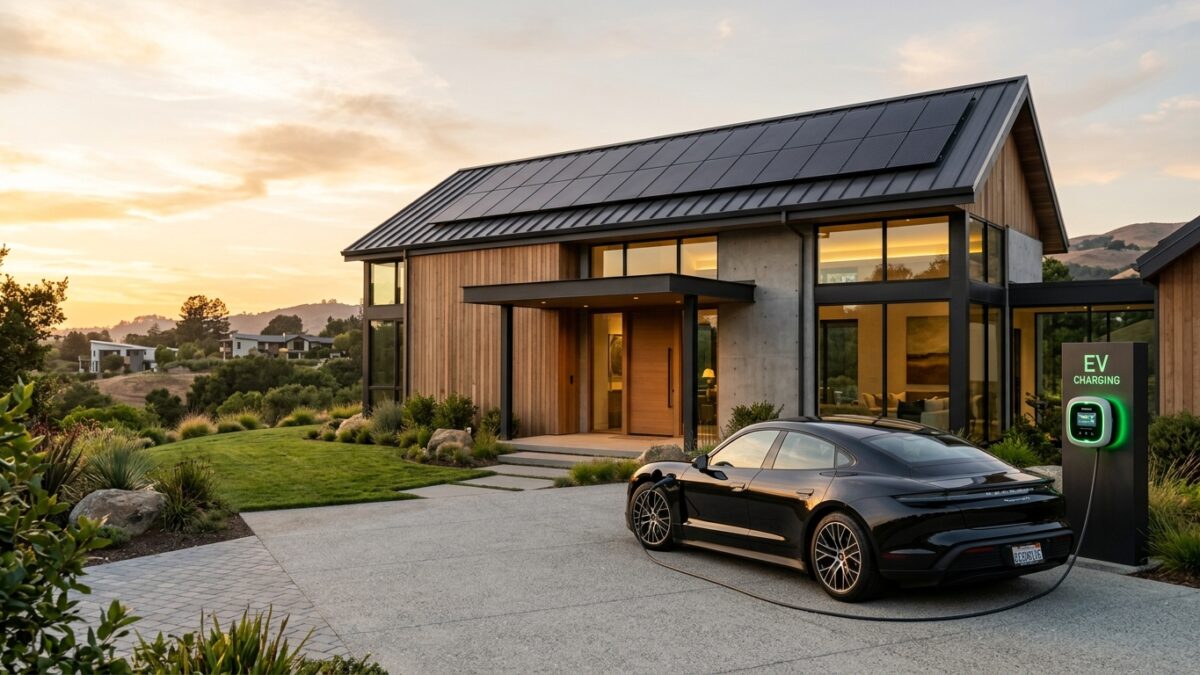
Plugging an electric vehicle into a home charger powered by free sunshine is one of the most compelling reasons homeowners invest in rooftop solar. Yet, one of the most common mistakes when designing a home solar EV charging infrastructure is treating the car like an ordinary home appliance. An electric car consumes substantial electrical energy, and undersizing your solar array will force you right back onto costly utility grid rates.
Advertisements
So, how many solar panels do you actually need to supply enough clean electricity for your daily commute? Here is the practical, real-world calculation based on daily driving habits and solar generation realities.
1. Calculating Daily Energy Consumption: Miles to Kilowatt-Hours
To determine panel count, you must start with vehicle efficiency. Most modern passenger electric cars—including models from Tesla, Hyundai, and BMW—average between 3 and 4 miles per kilowatt-hour (kWh) of battery capacity under normal driving conditions.
Advertisements
If you drive an average daily commute of 35 miles:
- Daily energy needed: 35 miles / 3.5 miles per kWh = 10 kWh per day.
- Charging loss buffer: Level 2 AC home chargers experience roughly 10% to 15% thermal and conversion losses. Factoring this in brings your true generation target to approximately 11.5 kWh per day.

2. Converting Energy Needs Into Solar Panel Quantities
A standard modern residential solar panel produces roughly 400 watts (0.4 kW) under peak test conditions. However, solar panels do not run at peak capacity all day. Solar production is measured in Peak Sun Hours (PSH), which typically ranges from 4 to 5.5 hours per day across most moderate climates.
Using a conservative estimate of 4.5 Peak Sun Hours:
- One 400-watt panel produces: 400W × 4.5 hours = 1.8 kWh per day.
- Total panels required for an 11.5 kWh EV demand: 11.5 kWh / 1.8 kWh ≈ 6 to 7 solar panels.
If your daily driving is longer—say 60 to 70 miles per day—your charging requirement doubles to 23 kWh daily, demanding 12 to 14 dedicated 400W panels just to offset driving consumption.
3. The Day vs. Night Dilemma: Why You Need Battery Storage or Smart Charging
Having enough solar panels on your roof is only half the battle. The biggest infrastructure bottleneck is timing: solar panels generate electricity between 9:00 AM and 4:00 PM, but most drivers plug their vehicle in during the evening.
To charge truly on 100% solar power without drawing from the grid at night, you have two primary infrastructure strategies:
- Home Battery Storage: Installing a 10 kWh to 15 kWh home battery (such as an LFP-based battery system) allows solar energy harvested during midday to be discharged into your vehicle overnight.
- Smart Solar EV Wallbox with Solar-Only Tracking: If your car is parked at home during daylight hours (e.g., remote work), smart wall chargers dynamically throttle charging speed to strictly match surplus solar generation, avoiding grid draw completely.

Key Takeaway for Homeowners
For standard daily driving (30 to 40 miles), adding 6 to 8 residential solar panels (2.4 kW to 3.2 kW array capacity) on top of your household’s baseline solar design will fully cover your electric car’s transportation energy. Sizing your electrical panel and inverter capacity for this extra load today will prevent costly retrofits tomorrow.


Leave a Reply
You must be logged in to post a comment.