AC-Coupled vs. DC-Coupled Solar Batteries: The Essential Retrofit Guide for Homeowners

Millions of homeowners who installed grid-tied rooftop solar panels years ago are reaching the same conclusion: solar panels alone are no longer enough. Net metering rate reductions (such as California NEM 3.0), escalating utility time-of-use tariffs, and frequent severe weather grid blackouts have made adding energy storage the number one home energy upgrade.
Advertisements
When retrofitting a battery storage unit to an existing solar array, homeowners face a critical architectural decision: AC-coupling versus DC-coupling. Both approaches store clean solar electricity, but they interact with your existing solar inverter and household wiring in fundamentally different ways.
1. Understanding the Electrical Flow: Direct Current vs. Alternating Current
Rooftop solar panels naturally produce Direct Current (DC) electricity, home appliances operate on Alternating Current (AC) electricity, and battery chemical cells store energy exclusively in Direct Current (DC). The distinction between AC and DC coupling comes down to where in this electrical path the battery connects:
Advertisements
- DC-Coupled Systems: The battery connects directly to the solar panel array on the high-voltage DC side, upstream of the main inverter. A single hybrid inverter manages both the solar panels and the battery charging simultaneously.
- AC-Coupled Systems: The battery functions as an independent AC appliance. Solar panels feed into your existing solar inverter, which converts DC to AC. That AC electricity travels down to an internal battery inverter, which converts it back into DC to charge the battery cells.
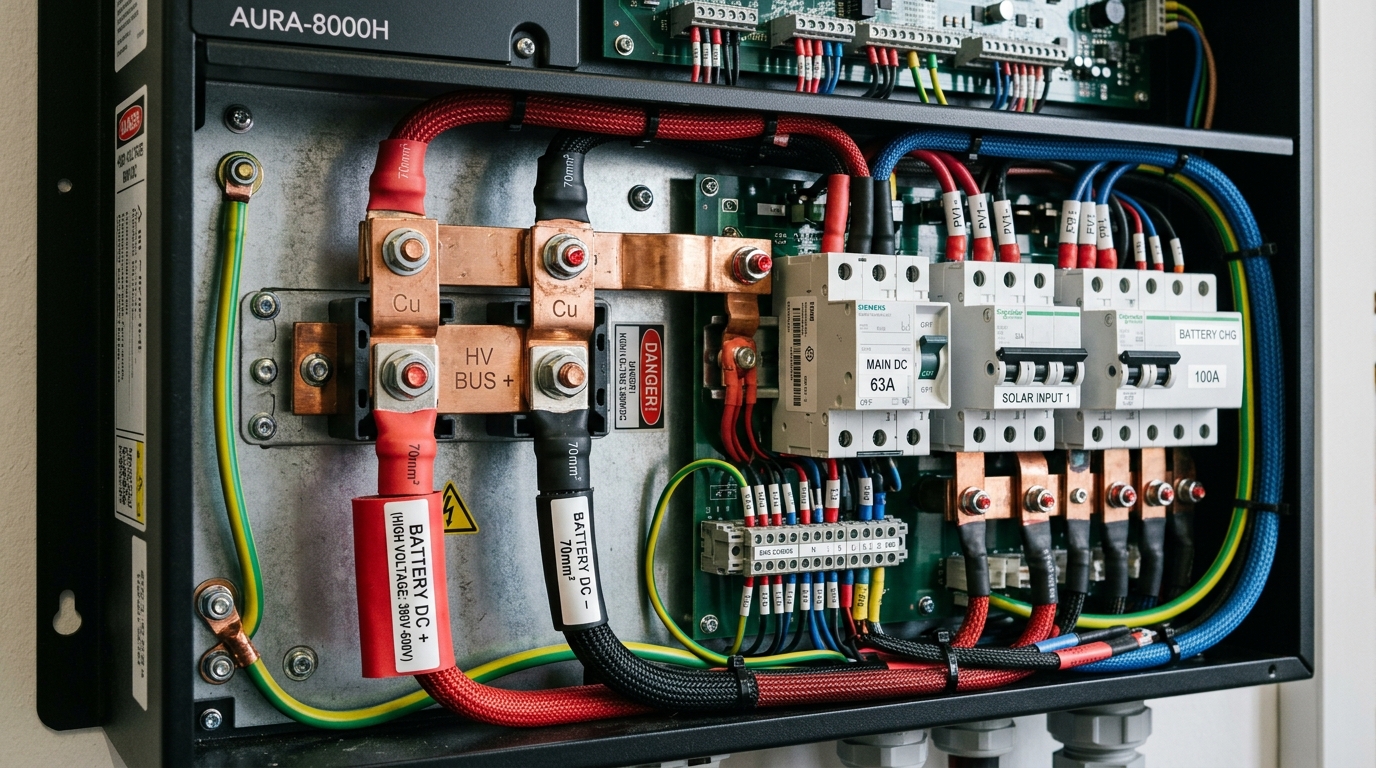
2. Round-Trip Efficiency: The Triple Conversion Penalty
The primary technical advantage of DC-coupled storage is high round-trip electrical efficiency. Because solar panels charge the battery directly across a shared DC bus, energy experiences only a single DC-to-DC voltage adjustment before storage. When household power is needed at night, that stored energy is converted to AC just once. Typical round-trip efficiency for DC-coupled systems ranges between 92% and 96%.
In contrast, an AC-coupled battery experiences a “triple conversion penalty”:
- Solar panels generate DC power, which is converted to 240V AC by your existing solar inverter (roughly 97% efficient).
- That AC electricity is converted back into DC by the battery charger (roughly 93% efficient).
- At night, that stored DC electricity is inverted back into AC to run your lights and appliances (roughly 94% efficient).
Compounding these three conversion stages depresses the overall round-trip efficiency of AC-coupled retrofits down to roughly 84% to 88%. While you lose 6% to 8% more solar electricity over time, the practical installation advantages of AC coupling often outweigh this minor loss.
3. Retrofit Simplicity and Microinverter Compatibility
Despite the efficiency penalty, AC-coupling is the overwhelming favorite for retrofit installations on homes with existing solar arrays for several compelling reasons:
- Universal Inverter Compatibility: An AC-coupled battery (such as the Tesla Powerwall 2/3, FranklinWH, or Enphase IQ Battery) works alongside any existing string inverter or microinverter brand without modifying roof wiring or replacing operational inverters.
- Microinverter Systems: If your roof uses Enphase or APsystems microinverters, DC electricity is already converted to AC directly beneath each panel. Adding a DC-coupled battery to a microinverter roof is technically impossible without tearing off all microinverters and completely rewiring the roof array.
- Permitting and Interconnection Ease: AC retrofits require no modification to existing solar utility interconnection agreements or original solar warranties. The battery is simply wired into a critical loads backup panel alongside your existing breaker box.
Which Architecture Should You Choose?
If you are installing a brand-new solar-plus-storage system from scratch, opting for a DC-coupled hybrid inverter system is generally superior: you purchase only one inverter, achieve maximum round-trip efficiency, and enjoy streamlined single-app monitoring.
However, if you are retrofitting a battery onto an existing, working solar installation – particularly one featuring rooftop microinverters – an AC-coupled battery storage system is the undisputed standard, delivering rapid, non-invasive installation, whole-home blackout protection, and effortless utility rate arbitrage.


Leave a Reply
You must be logged in to post a comment.