Microinverters vs. String Inverters with DC Optimizers: The Architectural Showdown
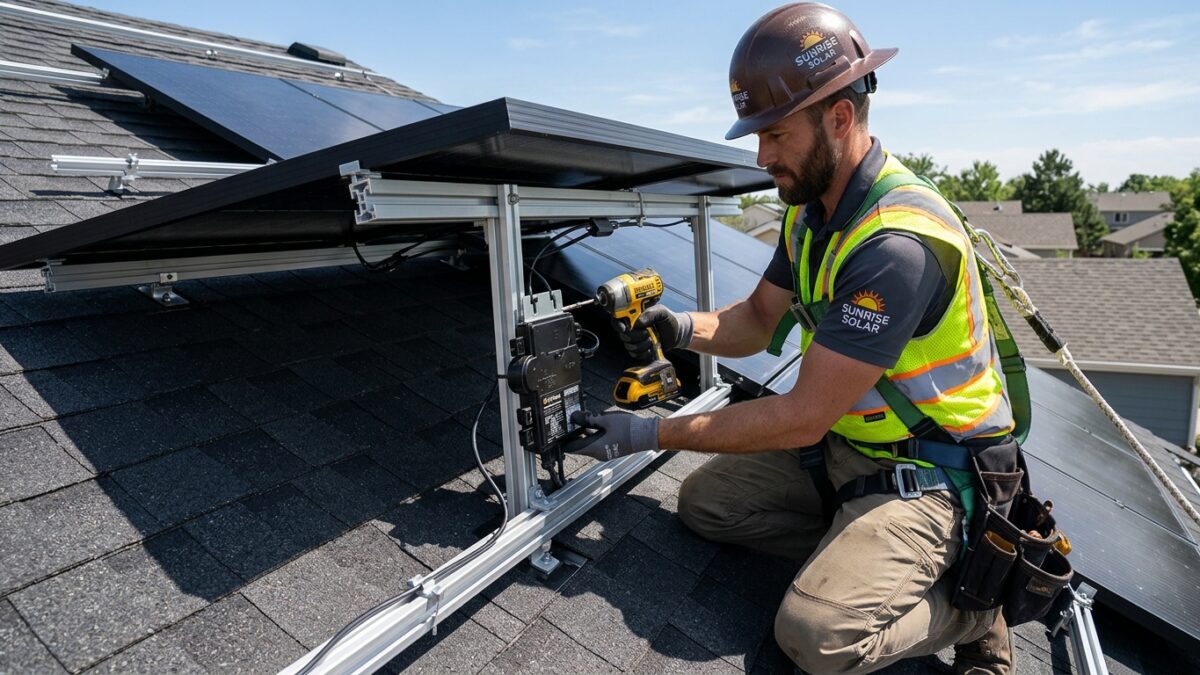
When designing a residential photovoltaic system, the choice of inverter architecture exerts a profound influence on your system’s lifetime energy harvest, safety protocols, expansion potential, and maintenance headaches. The days of simple, unoptimized traditional string inverters on residential rooftops are virtually over, replaced almost universally by Module-Level Power Electronics (MLPE).
Advertisements
The residential solar industry is fundamentally anchored by two competing MLPE philosophies: Microinverters (championed primarily by Enphase Energy) and String Inverters paired with DC Power Optimizers (championed primarily by SolarEdge). Both technologies satisfy modern electrical safety codes and mitigate panel shading, but their internal engineering and system failure modes differ significantly.
1. Architectural Fundamentals: AC on the Roof vs. DC Optimization
The core difference lies in precisely where Direct Current (DC) electricity is converted into household Alternating Current (AC):
Advertisements
- Microinverter Architecture: A miniature, fully enclosed inverter is attached to the racking rail directly beneath each individual solar panel. The module’s low-voltage DC power is immediately converted into 240V AC right on the roof. Standard AC trunk cabling combines the power from all panels and routes directly down to your main electrical distribution board.
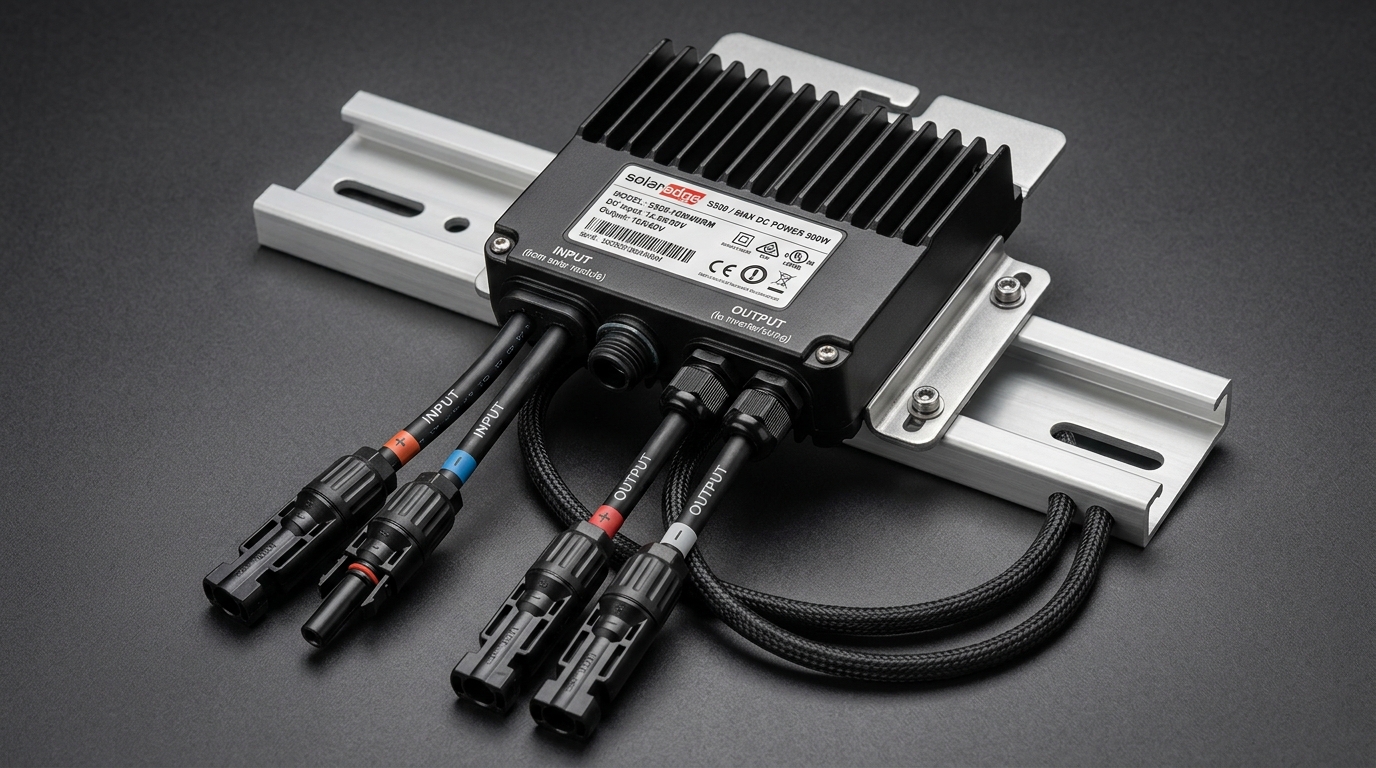
- DC Optimizer with Central Inverter: A small DC-to-DC converter (power optimizer) is mounted beneath each panel. Instead of converting DC to AC on the roof, the optimizer performs Maximum Power Point Tracking (MPPT) and regulates module voltage. High-voltage DC electricity (typically 380V to 400V DC) travels down conduit into a single, centralized wall-mounted string inverter, which executes the final AC conversion.
2. Partial Shading and Panel Mismatch Resilience
In legacy non-optimized string arrays, solar panels operate like old-fashioned holiday lights: if a chimney, tree branch, or bird dropping shades even a single cell, the current across the entire series string drops to match the weakest link, crippling total generation.
Both microinverters and DC optimizers effectively eliminate this “Christmas light effect” by giving every panel its own independent MPPT brain. If one module is shaded, the remaining unshaded modules continue producing at 100% capacity. However, microinverters possess a minor technical advantage on roofs with complex multi-pitch geometries: because each module is fully autonomous, panels can face east, west, south, and north at varying tilt angles without requiring complex series string voltage matching.
3. Reliability and the Single Point of Failure
When evaluating an electrical investment designed to operate continuously for 25 years in harsh outdoor elements, system reliability and failure downtime are paramount:
- Microinverter Distributed Reliability: Microinverters eliminate any single point of system failure. If one microinverter fails on a 24-panel array, the other 23 panels continue generating clean power uninterrupted. Furthermore, leading microinverters utilize semiconductor designs backed by 25-year manufacturer warranties that match the expected lifespan of the solar panels themselves.
- Central Inverter Vulnerability: While DC optimizers on the roof are very simple and durable (backed by 25-year warranties), the centralized wall inverter contains sensitive electrolytic capacitors and high-load power electronics. Standard string inverters carry 12-year warranties and typically require replacement at least once during a 25-year operational lifecycle. If the central inverter fails, your entire solar installation produces zero electricity until a replacement unit is sourced and installed.
4. Electrical Safety: Rapid Shutdown Compliance (NEC 690.12)
Modern building codes—specifically the National Electrical Code (NEC) Article 690.12—mandate that in the event of an emergency or firefighter intervention, rooftop solar array voltages must drop below 80 volts within 30 seconds of grid disconnection.
Both architectures provide built-in compliance:
- With microinverters, cutting grid power instantaneously de-energizes the rooftop inverters, leaving only low-voltage DC (<60V) between the panel junction box and the microinverter. No dangerous high-voltage DC exists on your roof or inside attic conduits.
- With DC optimizers, disconnecting AC power triggers an automatic “SafeDC” mechanism, dropping each optimizer’s output to exactly 1 volt, reducing the string to safe touch-voltage levels.
Verdict: Which Architecture Should You Choose?
Choose String Inverters with DC Optimizers if your installation budget is tightly constrained, your roof has straightforward unshaded planes, or you plan to pair your system with a DC-coupled high-voltage battery (such as the SolarEdge Home Battery), where avoiding roof-level AC conversions maximizes round-trip efficiency.
Choose Microinverters if your roof features complex multi-directional gables, frequent localized tree shading, you want the easiest pathway for future panel expansion, or you prioritize the peace of mind that comes with zero single-point failure risks and universal 25-year component warranties across your entire roof.


