5 Fatal Solar Panel Installation Mistakes That Will Ruin Your Expensive Roof
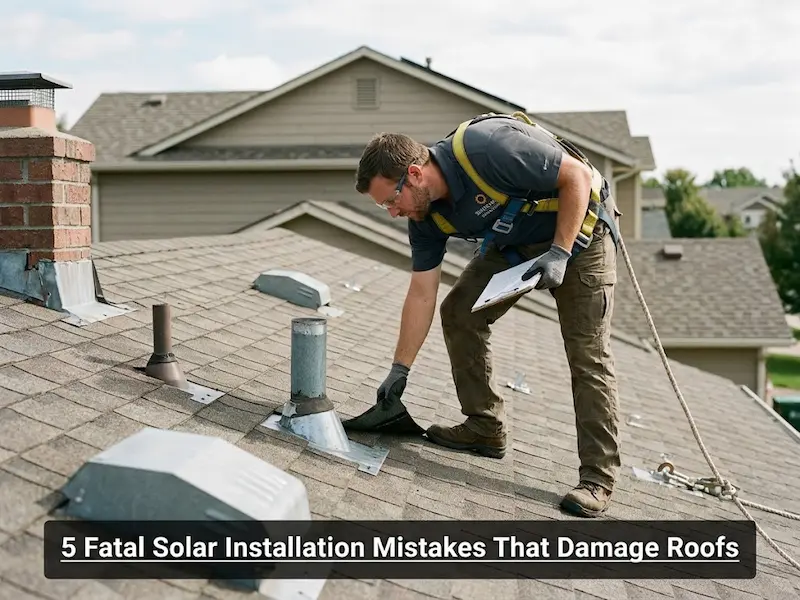
The scariest solar panel installation mistakes are not always visible when the contractor packs up and leaves. A badly positioned bracket can eventually contribute to roof leaks, while poor wiring or inadequate fasteners can create much more serious safety and repair problems.
Advertisements
Before transferring that deposit, you need to know exactly where a cheap installation can become an expensive mistake.
Five Fatal Solar Panel Installation Mistakes That Can Damage The Roof Before You Even Notice

A professional solar installation is supposed to add value to your property, not create another construction problem. The U.S. Department of Energy recommends checking roof condition before installation and establishing who is responsible if installation causes damage or leaks. Federal procurement guidance also recommends coordinating roof penetrations with the roofing professional or manufacturer so waterproofing remains compatible with the roof warranty.
Advertisements
1. Installing Solar On A Roof That Already Needs Replacement
This is the first trap because the panels themselves may last for decades while the roof underneath does not. If your roof is already approaching the end of its service life, you could eventually pay to remove the solar array, repair or replace the roof, and reinstall the panels. DOE specifically advises homeowners to ask whether roof repairs are needed before installation.
2. Drilling Through The Roof Without A Proper Waterproofing Detail
A roof penetration is not something that should be solved with a random tube of sealant. The attachment needs an appropriate flashing and waterproofing method compatible with the roof system, with the number and size of penetrations kept as low as practical. Federal solar procurement guidance explicitly calls for watertight seals and compatibility with the existing roof warranty.
This is the heart of roof leak prevention. Ask your contractor to show you the actual attachment detail before installation, especially if you have a metal, tile, membrane, or other specialized roof.
3. Blocking Roof Drains, Vents, Or Maintenance Access
Solar panels should not be positioned simply to maximize the number of modules. Poor layout can interfere with drainage, roof equipment, vents, skylights, or future maintenance access. Solar permitting guidance specifically warns against blocking drainage and requires roof penetrations to be properly sealed against water leakage.
Before approval, check that the layout leaves clear access around important roof equipment and drainage points. A few fewer panels can be a much better decision than creating a maintenance nightmare.
4. Using Cheap Brackets And Fasteners To Save On Installation Cost
The mounting system carries mechanical loads from wind, vibration, thermal movement, and the weight of the array. DOE identifies inadequate components, poor installation practices, insufficient strength, vibration-induced loosening, and clamp failures as recurring PV vulnerabilities.
The scary part is that mounting hardware failure may not look dramatic at first. A loose fastener can gradually worsen until movement damages the array, roof attachment, or surrounding components.
Ask for:
- Manufacturer-approved rails and clamps
- Rated structural fasteners
- Proper torque procedures
- Site-specific structural considerations
- Documentation of the installed hardware
If the contractor cannot explain what is actually holding your expensive panels to the building, stop there.
5. Treating Roof Warranty Protection As Someone Else’s Problem
A solar warranty and a roof warranty are not automatically the same thing. On commercial roofs especially, the solar installer should coordinate with the roofing manufacturer or qualified roofing professional so the PV system does not compromise the existing warranty.
That is why voiding roof warranty should be discussed before the contract is signed, not after the first leak appears. Get written confirmation about who covers roof damage, how penetrations are handled, and what happens if panels need to be removed for future roof repairs.
Mounting Hardware Failure And Roof Structure Problems Can Turn A Storm Into A Disaster


A solar array has to remain mechanically stable long after the installation crew leaves. Wind-induced vibration can loosen fasteners, while inadequate attachments or failed clamps can allow movement across the array. DOE’s weather-resilience guidance specifically recommends properly rated locking hardware, appropriate structural attachments, and careful attention to critical fastened joints.
Do not judge an installation by how straight the panels look from the driveway. Ask whether the racking system was designed for the site’s wind conditions and whether the installer follows the manufacturer’s torque requirements.
A useful handover checklist includes:
- Mounting-system manufacturer and product name
- Fastener and clamp specifications
- Installation torque records where applicable
- Structural documentation when required
- Photos of attachment points before panels cover them
- Warranty information for workmanship and hardware
DOE’s maintenance guidance even recommends torque audits and checks of fasteners and racking as part of PV system maintenance.
Electrical Fire Risks Hide Behind Bad Wiring, Weak Connectors, And Sloppy Contractor Work


The panels are only one part of the system. Poor cable management, damaged conductors, defective connectors, inadequate electrical enclosures, or faulty installation can create arcs or hot spots. DOE says properly installed rooftop PV systems should not introduce significant risk, but design flaws, component defects, and faulty installation can cause fires.
Bad Cable Management Leaves Wires Vulnerable
Wiring should not scrape against sharp metal edges, hang loosely under modules, or depend on unsuitable cable ties exposed to harsh outdoor conditions. DOE’s PV vulnerability guidance identifies failed wire ties and inadequate electrical enclosures among observed system weaknesses.
A good installer should leave cables secured, protected from abrasion, and routed with weather exposure in mind. This is especially important because DC wiring can remain energized whenever the panels are producing power.
Cheap Or Poorly Installed Connectors Can Become A Fire Risk
Electrical connections need compatible components and proper installation. A loose or damaged connection can generate heat, while DC electrical faults can produce sustained arcs that are capable of starting fires. NREL notes that PV DC current can sustain an arc and identifies exposed energized conductors and arc or ground faults as hazards.
This does not mean rooftop solar is inherently dangerous. DOE describes PV fires as very uncommon, but faulty installation is one recognized cause, which is precisely why cutting corners is such a bad gamble.
Skipping The Electrical Inspection To Finish Faster
If your jurisdiction requires permits or inspection, treat that process as part of the safety system rather than an annoying delay. The final installation should comply with applicable electrical and building requirements, including required shutdown and protection measures.
One more warning sign is a contractor who refuses to provide clear information about the inverter, disconnects, grounding, protection equipment, or system documentation. You are buying an electrical installation, not simply a collection of panels.
Before comparing quotes, it is also useful to understand how component quality and procurement affect the wider photovoltaic system, including the supply-chain considerations discussed in this solar charging and photovoltaic production guide.