Solar Agrivoltaics: Engineering Shared-Land Solar for Crop Farming and Livestock Grazing
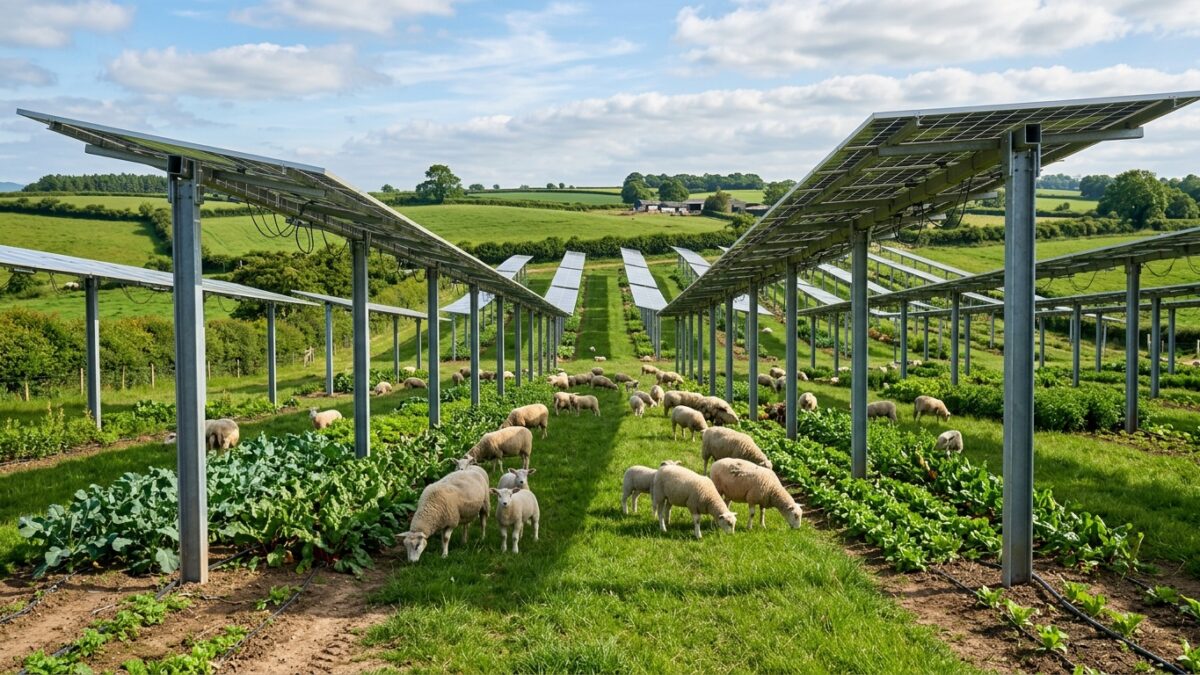
As the global transition toward renewable power accelerates, utility-scale ground-mounted solar installations often encounter contentious community pushback over land use competition. Critics frequently point out that converting thousands of acres of fertile agricultural farmland into fenced-off solar arrays threatens domestic food production and rural economies.
Advertisements
The breakthrough engineering discipline bridging this divide is agrivoltaics – the simultaneous co-location of agricultural food production and photovoltaic solar power generation on the exact same plot of land.
1. Structural Racking Engineering: Clearance for Heavy Farm Machinery
Standard ground-mount solar arrays are engineered purely to minimize steel weight and cost, typically positioning the lower panel edge only 2 to 3 feet above grade. In sharp contrast, agrivoltaic racking represents specialized civil engineering designed around farming equipment and animal husbandry:
Advertisements
- Elevated Overhead Clearance: Racking columns are elevated to provide 8 to 10 feet of vertical clearance, allowing tractors, combines, and seeding machinery to navigate beneath solar arrays without risk of collision.
- Extended Inter-Row Spacing: While commercial solar arrays minimize spacing to maximize panel density, agrivoltaic rows are spaced 20 to 35 feet apart. This wide row profile matches standard agricultural implement widths and guarantees ample direct sunlight reaches crops.
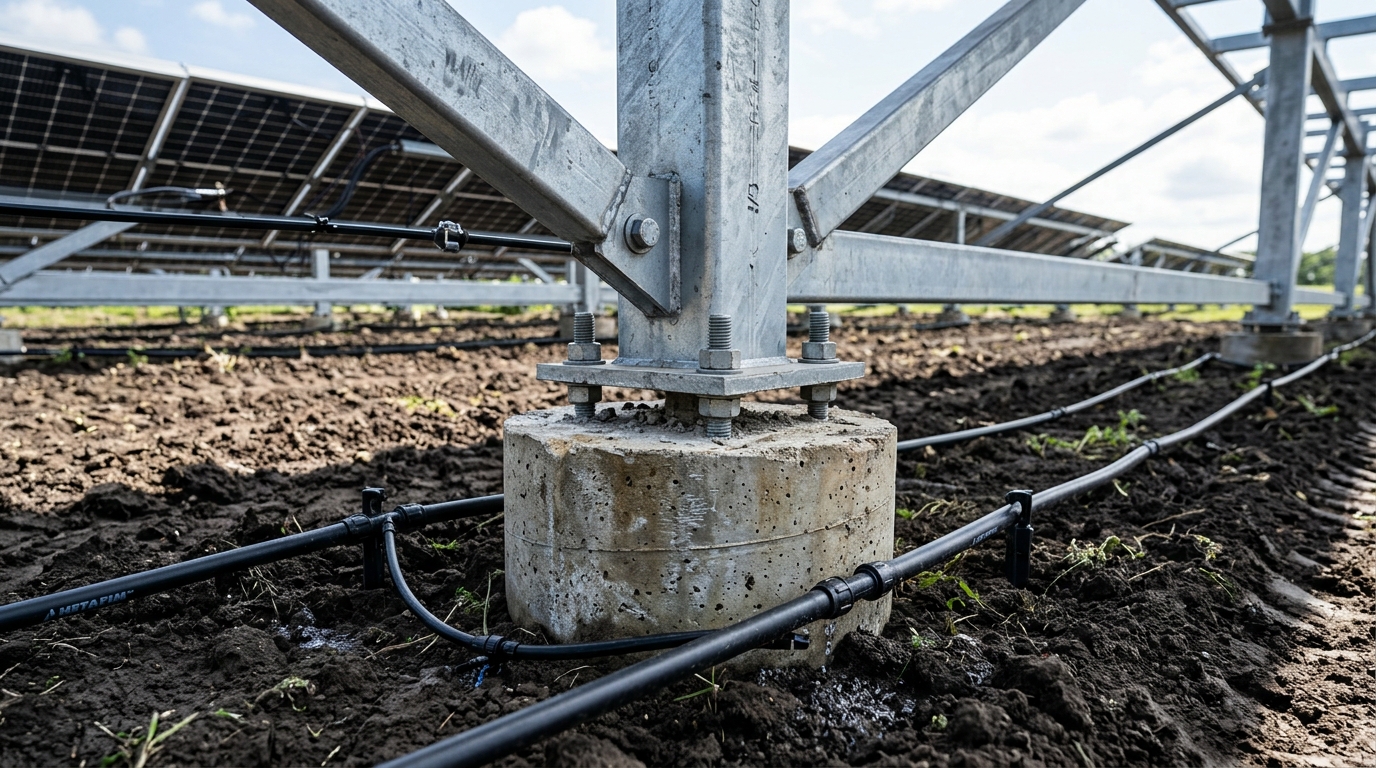
- Deep Geotechnical Pier Foundations: Because elevated racking experiences severe wind leverage, foundation piers must be driven 8 to 14 feet deep into compacted subsoil to resist torsional wind overturning moments.
2. Microclimate Synergy: Moisture Retention and Temperature Buffering
Rather than stunting agricultural productivity, partial shading from overhead solar panels creates an engineered microclimate that actively enhances crop growth in arid and semi-arid climates:
- Reduced Soil Evaporation: Intermittent shade throughout hot midday hours lowers soil surface temperatures by 5 C to 12 C, reducing soil water evaporation by 20% to 30% and conserving millions of gallons of irrigation water.
- Protection from Thermal Heat Stress: Plants exhibit a physiological threshold known as the light saturation point. Excess direct sunlight above this threshold cannot be used for photosynthesis and causes cellular heat stress. Partial shade allows shade-tolerant crops – such as berries, lettuce, tomatoes, and alfalfa – to flourish with higher overall biomass yields.
- Transpiration Cooling for Solar Panels: As crops release moisture vapor through biological transpiration, the local ambient temperature beneath the panels drops. Cooler operating temperatures increase solar panel electrical efficiency, delivering a 2% to 4% boost in annual kilowatt-hour harvest.
3. Solar Grazing: Low-Maintenance Vegetation Control
For livestock farmers, agrivoltaics introduces a lucrative land management model known as solar grazing. Sheep grazing beneath solar arrays has rapidly become the preferred method of biological vegetation management across North America and Europe.
Unlike goats or cattle, which may chew on electrical conduit or lean heavily against racking posts, sheep naturally keep grass trimmed to safe heights beneath panels without damaging equipment. Solar operators pay sheep farmers thousands in annual vegetation management service contracts, while farmers gain free nutritious grazing pasture and natural shade that protects their herds from summer heat exhaustion.
Dual-Revenue Economics: The Farmer Salvation
For multi-generational family farms facing volatile commodity prices and climate-driven droughts, agrivoltaics provides financial diversification. Landowners maintain agricultural tax status and crop revenue while earning long-term, inflation-adjusted solar lease royalties of to ,500 per acre annually for 25 to 30 years. Solar agrivoltaics demonstrates that clean energy infrastructure and agricultural heritage can thrive together in mutual harmony.

Leave a Reply
You must be logged in to post a comment.