Grid-Forming Solar Microgrids and Black Start Sequencing: Maintaining Resilient Power During Total Grid Blackouts

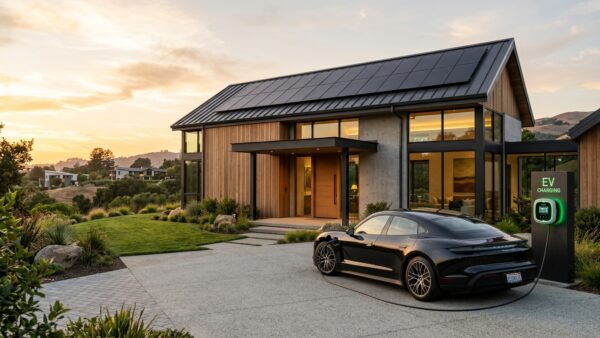
During catastrophic natural disasters, winter ice storms, or regional transmission substation failures, hundreds of thousands of homes are plunged into darkness. A common shock for new solar owners during widespread utility blackouts is discovering that their grid-tied solar panels instantly shut down—even beneath clear blue skies. To establish authentic, multi-week off-grid survival capability, modern infrastructure relies on Grid-Forming Solar Microgrids with Black Start Sequencing.
Advertisements
1. Grid-Following vs. Grid-Forming Inverter Topologies
To understand why standard solar arrays fail during blackouts, one must examine inverter control algorithms. Traditional solar inverters operate under a grid-following topology: they possess no internal voltage or frequency clock. Instead, their phase-locked loop (PLL) monitors the external 60 Hz (or 50 Hz) sinusoidal AC waveform delivered by the utility, injecting synchronized current. When the utility voltage drops, safety anti-islanding relays instantly disconnect the inverter to prevent electrocuting utility linemen working downstream.
Grid-forming inverters, by contrast, utilize Virtual Synchronous Machine (VSM) control algorithms. When the main grid collapses, the grid-forming inverter steps forward to actively synthesize its own ultra-stable 120V/240V AC voltage waveform and exact 60.0 Hz frequency reference, providing a rigid electrical foundation that allows other standard solar inverters and household loads to synchronize and operate normally in complete isolation.
Advertisements
2. The Black Start Sequence: Bootstrapping a Dark Microgrid
In power engineering, ‘Black Start’ refers to the ability of an electrical generation system to recover from a complete shutdown and restore local power without relying on external electrical input from the transmission grid. If a microgrid’s stationary batteries are completely depleted during an extended overnight blackout, executing a black start requires an automated multi-stage choreography:
1. Auxiliary DC Wakeup: As sunrise hits the panels, an internal low-voltage DC-DC trickle charger harvests minimal solar milliwatts to reboot the primary microgrid management controller.
2. Inrush Soft-Start: The grid-forming inverter gently ramps up AC voltage to energize distribution transformers, carefully limiting magnetic saturation inrush currents.
3. Controlled Solar Resumption: Downstream solar strings detect the stable synthesized AC waveform and re-engage, routing fresh clean electricity directly into home battery reserves and critical load circuits.
3. Frequency-Watt Throttling and Microgrid Interconnection Devices
Balancing power generation and consumption within an islanded microgrid is an intense dynamic challenge. In an open utility grid, excess power is absorbed by millions of other regional consumers. In an isolated islanded microgrid, if solar generation exceeds household electricity demand while battery reserves reach 100% state-of-charge, excess power can dangerously overdrive system voltage.
Grid-forming controllers solve this through Frequency-Watt droop control. To throttle back generation without turning off panels completely, the master inverter intentionally raises the microgrid AC frequency from 60.0 Hz to 60.5 Hz or 61.0 Hz. Downstream smart inverters detect this precise frequency rise and proportionately trim their power output to match instantaneous household demand in real time, maintaining rock-solid grid stability.
The Ultimate Standard in Energy Sovereignty
As aging centralized electric utility grids face increasing stress from severe weather anomalies and surging electrification demand, localized grid-forming solar microgrids provide the definitive blueprint for energy security. Equipped with automated black start capability, property owners transition from passive utility rate-payers into self-sustaining clean energy islands capable of weathering prolonged regional disasters indefinitely.